Friday, 31 December 2010

Tempus per Annum - Domine in tua misericordia


I am currently working on volume 3 of my collection of motets Tempus per Annum, my collection of motets for the Church's year. This volume covers the half of the Sundays in Ordinary Time. I have just finished number 7, Domine, in tua misericordia, the Introit for the 7th Sunday in ordinary time, set for 5 -part choir (SATBB).

CD Review

My review of Orff's Carmina Burana from Richard Cooke and the Royal Philharmonic Orchestra is here. It came out earlier last year but somehow got missed.

At Brilliant's prices, you could easily buy this if you are curious or if the excellent cast appeals. But if you really want a good recording of Orff's
Carmina Burana then go for Gundula Janowitz and Dietrich Fischer-Dieskau conducted by Eugen Jochum.

Thursday, 30 December 2010

Recent CD Review

My review of Kaddish by Lawrence Siegel is here, on MusicWeb International.

A great deal of love and thought has gone into this disc.

Wednesday, 29 December 2010

Review of Chapelle du Roi

My review of The Absolution of England, the concert by the Chapelle du Roi as part of the Christmas Festival at St. Johns Smith Square, is here on Music and Vision (Subscription Site).

Sunday, 26 December 2010

Recent CD reviews

My review of the disc of choral music by contemporary American composer Daniel Asia performed by the BBC Singers is here.

Exemplary performances. This collection shows Asia to have a nice ear and it is well worth investigating.

And my review of the disc, Praise to the Holiest, from Cantores Missae is here. Both reviews are on MusicWeb International.

Not aimed at the average listener, rather for those interested in music to be performed, at their church services. And as such it is beautifully executed and should, I hope, win many people over.

Friday, 24 December 2010

And Further Ahead

Opera Magazine's We hear that... column this month, mentions that Barry Banks will be taking the title role in a new production of The Tales of Hoffmann at ENO in Spring 2012. It will be directed by Richard Jones, conducted by Anthony Walker and will feature Clive Bayley as the villains. The big question, for me, is around the edition that will be used. ENO have a tradition of using up to date editions of the opera, whereas the Royal Opera tends to stick to the traditional version which takes no account of the discoveries made recently. So I hope that this continues.

And still on the subject of Les Contes d'Hoffmann, Natalie Dessay will be singing the heroines in Laurent Pelly's new production at the Liceu in Barcelona in 2012/13.

Music Theatre Wales will be premiering Philip Glass's new Kafka inspired opera, The Trial, in 2013.

Jonas Kaufmann is scheduled to sing the title role in David McVicar's new production of Andrea Chenier in 2015 (!) Perhaps Kaufmann will be able to convince me that the opera is actually worth hearing!

Rare Opera

A couple of sightings of rare opera coming up in the new year. On February 5th East London Metropolitan Opera and the Haydn Chamber Orchestra will be presenting a concert performance of Rossini's Armida at St. John's Smith Square. This will feature Emma Dogliani in the title role and will be conducted by Robin Newton. The opera is perhaps best known for the trio for 3 tenors, the only time that Rossini seems to have written for this combination. The opera was written for Naples where the opera house had 3 major tenors, and most of his operas for Naples feature significant numbers of tenor parts. The title role was written for then muse, Isabella Colbran.

Then between 22nd and 26th February you can sett a production of Albert Lortzing's Zar und Zimmerman at Haslemere Hall in Haslemere. This will be presented by Opera South, directed by Ian Gledhill and conducted by Tom Higgins, with the Guildford Philharmonic Orchestra. The opera will be sung in English and is being presented as Peter the Great or Tsar and Carpenter. The opera was written in 1837 and remains Lortzing's best known work, it features a disguised Peter the Great getting involved in shennanigins in a Dutch shipyard. The opera is still performed in Germany but is quite a rarity in the UK.

Tuesday, 21 December 2010

Opera Now

The new production of When a Man Knows gets a mention in the latest News Roundup on the Opera Now website.

Saturday, 18 December 2010

Mamelles


I know its a bit far to go, especially if the weather is like it is now in London (i.e. Snowing heavily), but during January the Opera Comique in Paris is presenting Poulenc's opera Les Mamelles de Tiresias in a programme with Milhaud's Le Boeuf sur le Toit and Shostakovitch's The programme is a co-production with Opera de Lyon and appeared there in November. Events surrounding the performances include Poulenc's Histoire de Babar, a programme on Sacha Guitry, and Poulenc songs sung by Karina Gauvin and by Karen Vourc'h.

Promised End

If you missed Alexander Goehr's new King Lear opera Promised End then it is being broadcast tonight at 10.30pm on BBC's Radio 3; a chance to re-assess the work again.

Friday, 17 December 2010

Broad Ripple Gazette vol. 7, no 25

Enjoy the holiday season – and remember that independent music makes a great gift. Buy a CD, take in a concert, download a tune. It’s good for the winter blahs!

Reviews:
I did venture outside of our great neighborhood a couple of times last year to see music. I’m veering off course for this edition to tell you about them.

Kid Rock and Bon Jovi
July 30, 2010
Soldier Field, Chicago


Thanks to the generosity of CATH customer and music fan, Carla Proffitt and her brother, I got to attend a big rock show in the big city! It was one of those last minute plans that worked out wonderfully.
I’d never been to Solider Field and it was packed. This is one of the biggest shows I’ve ever seen and the crowd was huge - attendance hovered at 55,000. While I was excited to go to a show and kick around Chicago, I didn’t know how much I’d enjoy it!

We didn’t realize that Kid Rock was opening until we were on the road. I must admit the only things I knew about him was that he and Pamela Anderson jumped off of a yacht to celebrate their (short-lived) wedding vows, he was on the Bob & Tom Show and he’d had a #1 hit with, “All Summer Long.”
What I didn’t realize is how much I’d love his show! It was big goofy, giggling, sing-along fun. Kid Rock said something that I’ve known my whole life, but it was great to be reminded of, “blowing someone else’s candle out will not make yours burn any brighter.” I’ve been extra-mindful of that ever since. 

Bon Jovi was just as great and fun – who knew that I knew so many Bon Jovi songs?  I guess living in South Jersey for five years rubbed off a bit. It was a great night – the weather was perfect, it was fun to let my hair down and dance along we were able to walk back to the hotel. That’s how a hot summer night should be spent! 


Ryan Bingham
October 15, 2010
Austin City Limits Festival
Austin, Texas


Ever since I saw Ryan Bingham play at Birdy’s four years ago, I’ve been a big fan. Two years ago I got to stand on the stage of Ryan's ACLF set – which is almost as cool as standing in front of the stage at Birdy’s.. When he won a Grammy for "The Weary Kind (Theme From Crazy Heart)," this year I actually jumped up and down on my bed in excitement.

My friend Aaron Stroup thinks that my (very appropriate, proud, aunt-like) love of Ryan is a little obsessive and I have no idea what he’s talking about...the fact that I managed to snap about six zillion during my ten minutes in the photo pit means nothing. Really. 


Gogol Bordello
October 16, 2010
Austin City Limits Festival
Austin, Texas


Wow! I had no idea what to expect from Gogol Bordello, but kept hearing the buzz about them all over the festival. The crowd waiting to see them was fired up! The band is good old -fashioned dance-y world music gypsy punk fun. I was sorry to miss their show at the Vogue a few weeks later, but I hear they were just as fabulous!


Norah Jones
October 17, 2010
Austin City Limits Festival
Austin, Texas


I've been a fan of Norah Jones since her first record in 2001. There aren't many women named Nora/Norah between the ages of eight months and 88 years old. The beautiful and talented Norah Jones blew a lot of old lady dust off of the name.

I had a photo pass for the festival, which meant that I could stand in photo pit in front of the stage for the first three songs. I will admit that I closed my eyes while I was waiting for the show to start and pretending like the thousands of people chanting, "Norah, Norah, Norah" were calling for me. Pathetic, but true!

I saw Norah play right before Middletown at the Jazz Fest several years ago. She seems to have found her voice and style. Her set was amazing and her band was terrific. She does the name proud!

Recent CD Reviews

My review of Hasse's Marc'Antonio e Cleopatra from Ars Lyrica Houston is here.
Well worth encountering in this engaging performance.

And my review of Monsigny's Le Deserteur is here, both reviews are on MusicWeb International.
This isn’t a master-work, but it is a fascinating and charming.

Thursday, 16 December 2010

Magi

Tonight, my cantata the Magi will be receiving its premiere at London Concord Singers concert at the Grosvenor Chapel, South Audley Street, Mayfair, London at 7.30pm. The remainder of the programme includes music by Cecilia McDowell, Hieronymous Praetorius, Mendelssohn, Gesualdo, Nicholas Maw and Peter Philips. The new piece has proved popular with the singers so I can only hope that it is equally popular with the audience. The writing, for 8 part choir, uses quite a lot of bi-tonality which makes it tricky to sing but is proving very effective (well, at least I think so).

Tuesday, 14 December 2010

Review of Tannhauser

My review of the new production of Tannhäser at Covent Garden is here, on Music and Vision (subscription site).

Monday, 13 December 2010

Bach's Christmas Oratorio

On Sunday at the Queen Elizabeth Hall, the Orchestra of the Age of Enlightenment under the direction of John Butt, performed Bach's Christmas Oratorio, complete. Butt directed from the harpsichord with a second keyboard player at the organ, though I must confess that at times I found the harpsichord sound a little difficult to hear amidst everything else.

Butt has recently recorded the St. Matthew Passion with his own Dunedin Consort, and on that recording he was firmly 1 voice to a part. But at Sunday's concert we had 4 soloists plus the choir of the Enlightenment. Now, granted, the choir numbered only 13 so the differential was not huge. But, if you read Andrew Parrott's book about performing Bach, he quotes various treatises related to Lutheran performance which suggest that if you use more than 1 voice to a part, you should group the additional voices separately, i.e. you would have 3 group of 4 (SATB). It would have been interesting to try this rather than having the choir in a block at the side of the stage. The whole stage arrangement was odd, because the main body of strings were drawn very far forward, so the soloists sat at the side and walked on for their solos. But, this is not simple in the Christmas Oratorio so we were conscious of a great deal of very careful coming and going.

The other problem with doing soli and choir is that, like in the St. Matthew, is blurs things. If you have the same voices doing the chorals as the solo sections which mix choral and recitative, then you get a better balanced feel. This was the revelation when I first heard the St. Matthew in 1 voice to a part.

Now, having got my gripes out the way, I can safely say that the performance was magical. Nicholas Mulroy was incredible as the Evangelist, sweet voiced, mellifluous but with a fine attention to words. (I need to get Butt's recent St. Matthew recording to hear Mulroy as the Evangelist their. ) Not only that, but he coped brilliantly with Butt's speeds and gave the most amazingly fleet performances of Bach's passage work in his first 2 arias. The other three soloists, Julia Doyle, Meg Bragle and Matthew Brook, were in the same class and produced a wonderfully balance solo line up. The choir was equally good and equally technically adept in the faster passages. (Another gripe, if you are going to put the choir at the side of the stage rather than the back, you should ask the men to shine their shoes as they can be seen!).

As ever the OAE played superbly with some lovely solo playing and of course, the delectable oboe quartet in the 2nd cantata (this must be my favourite moment). Only the solo horns seem a little out of sorts.
Well, a busy weekend indeed. On Saturday we went to see the first night of the Royal Opera's new production of Tannhäuser, in Tim Albery's stripped down production. (A full review will follow) Was it my imagination or did Act 3 bring back vague memories of Elijah Moshinsky's stripped down Peter Grimes.

Then on Sunday morning we were singing Gounod's Messe dite de Clovis at St. Mary's Cadogan Street. Another one of those works which makes me wonder where on earth Faust came from. Plenty of ink has been spilled over who wrote Shakespeare's plays, but did Gounod have a tame composer in the closet to write his operatic masterpiece for him? Anyways, the genius (?) found in Faust doesn't seem to find its way into Gounod's masses, useful and pleasant though they are.

Finally off to the Queen Elizabeth Hall for the Orchestra of the Age of Enlightenment's superb performance of Bach's Christmas Oratorio, complete. With John Butt's fleet tempi, the evening did not last much more than 3 hours including interval. Bliss.

Tonight we are having our dress rehearsal at the Grosvenor Chapel ready for Thursday's concert, From Advent to Epiphany, when London Concord Singers will be premiering my cantata The Magi, further details here.

Sunday, 12 December 2010

Is Cleopatra funny?

Re-reading the programme notes for Cecilia Bartoli's concert on Wednesday, I did rather find myself disagreeing with the writer (Christopher Cook) on the subject of Handel's Giulio Cesare. He refers to the way that 'Handel and his librettist blend the serious with the comic', going on to refer to Cleopatra as 'playful, funny, teasing and an unscrupulous operator'. I would certainly agree with the second comment, as that is what makes Cleopatra so charming, but I would have to disagree with the first comment, I don't think there is actually anything specifically funny in the libretto. Handel certainly didn't do funny, his lighter operas can have a rather satirical bent, but never outright comedy. Giulio Cesare belongs to the first Academy period, when Handel was doing operas of high seriousness; mainly, it seems likely, because that is what his aristocratic backers on the Academy board wanted. Nowadays, producers rather add a comic element to these operas, both the Glyndebourne Rodelinda and the Glyndebourne Giulio Cesare had crowd pleasing comic elements which have no place in the music. So no, I don't think the opera blends serious with comic.

The article then goes on to describe the scene when Cleopatra sings V'adoro, pupille as 'perhaps owes as much to a Soho burlesque at The Windmill as it does to ancient Parnassus'. Really? Obviously I have a far more serious view of the opera than Christopher Cook, but that raises the question of who is right. Because I put Handel's music on something of a pedestal, am I right in attributing motives of high seriousness to the opera productions. Was the original Parnassus scene viewed as being a little risqué? Surely the care which Handel lavished on the orchestration, with the on-stage orchestra of muses specified as having 9 instruments, mitigates against the idea that the scene had a burlesque element.

Review of Cecilia Bartoli at the Barbican

My review of Cecilia Bartoli's concert on Wednesday at the Barbican is here; the programme of Handel arias was presented with the conductorless Basel Chamber Orchestra. The review is on OperaToday.com.

Friday, 10 December 2010

Stile Antico concert report

I was at the Barbican on Wednesday, reviewing Cecilia Bartoli's recital, so unfortunately missed Stile Antico's concert at the Cadogan Hall. Luckily friends were there to report back. Stile Antico are a group of young British singers, on Wednesday they numbered some 13 people, who perform conductorless. An impressive feat in any repertoire, but particularly true in their chosen field of renaissance polyphony. They have recently been touring, supporting Sting in his Dowland lute-song project!

Wednesday's recital centred round Tallis's Missa Puer Natus Est, opening with the plainchant Veni Emmanuel and Tallis's Videte Miraculum, finishing gloriously with John Shepherd's Verbum Caro. The opening to the second half, Taverner's Audivi vocem de caelo was sung rather effectively from the balcony.

A well disciplined group, with brilliant tuning and a sound; the women (sopranos and altos, no counter-tenors) with clear bright voices. The group seem to be genuinely conductorless, rather than one of the singers discreetly taking the lead. This seems to lead to a different type of rapport with the audience, as the singers are concentrating so much more on each other. Their programme provided lots of extended solo passages for different combinations of voices, but the results were admirably homogeneous.

The programme concluded with an encore, a rumbustious account of Byrd's Vigilate.

Thursday, 9 December 2010

Recent CD Review

My review of the reissue of Scarlatti's La Santissima Trinita is here, on MusicWeb International.

One of my discoveries of the year. Very fine singing and playing, combined with a work which seems to have an abundance of variety, displaying Scarlatti’s genius at its best.

Wednesday, 8 December 2010

Andreas Scholl and Philippe Jaroussky

Last night (Tuesday 7th December) was one of the much anticipated concerts in the Barbican's Great Performers season, two of the world's star counter-tenors, Andreas Scholl and Philippe Jaroussky, in concert together with Jaroussky's Ensemble Artaserse.

Following their rather skittish interview in the Guardian I did rather wonder what to expect. In the event, we had an attractive sequence of airs, songs and duets by Purcell, with only 1 duet which had any hint of gender bending. The programme was enthusiastically received by the capacity audience and we were treated to 3 encores. But I was left a little unsatisfied and after the concert was puzzling over quite what was lacking.

Ensemble Artaserse is a small group and their line up last night was heavily continuo based (harpsichord/organ, viola da gamba, basse de viol, theorbo and guitar) with just 2 violins, viola, 2 recorders and 2 oboes. In all of the dance based pieces they gave the music significant rhythmic impulse which was exciting, but wearing after a time. The group are conductorless and I did wonder whether that was the problem.

Turning to the singers I realised that, far more than in Handel, it is the words which are important, not just their declamation but the way that they link with Purcell's music. His English word setting is some of the greatest ever written, but it is also pretty idiosyncratic. Scholl's English diction, whilst not faultless, was amazingly good. But even he seemed to struggle. In the shorter numbers like Sweeter than Roses or Music for a while he was elegantly beautiful, but didn't quite touch the heart strings the way Deller did (or more recently Iestyn Davies at this year's Proms in Cadogan Hall). In a longer number like O Solitude Scholl seemed to lose his way a bit. It might have been the frog in his throat, or possibly the way the piece sat in his voice, going a bit low, but though there were lovely phrases, the whole was less than the sum of its parts.

Jaroussky's diction was impressive, considering his franco-phone background, but it still has some way to go. Part of the problem seemed to be that his pronunciation was a little wayward; it was inconsistent, sometimes a word was produced fine and sometimes not. With his high, focussed voice, Jaroussky was loveliest in the long lyrical items like Fairest Isle and The Evening Hymn.

On balance, the evening seemed to be slightly less than the sum of its parts. Purcell's distinctive qualities seemed to not be quite captured. I think that what we lacked was the strong guiding presence of someone like William Christie, someone who could bring stylistic discipline and coherency.

Tuesday, 7 December 2010

Review of Alcina

My review of the concert performance of Alcina at the Barbican on Saturday is here, the review is on the OperaToday website (http://www.operatoday.com)

Monday, 6 December 2010

Rossini continuo

When Rossini wrote his comic operas, what did he actually hear in his head for the continuo. We know that a number of Italian theatres continued to use harpsichords, though the last new instrument was made around 1800. And other theatres used a combination of cello and double bass, with the cello spreading the chords; this can be heard on the Naxos CD of The Barber of Seville. I've never understood why this isn't used more often.

But, the question that has always puzzled me is what Rossini expected; did he really want a piano. Would an early piano be what was expected, or would that be too exotic. After all, in the later 19th century one of the divas used to have a piano wheeled onto the stage during the lesson scene in the Barber and sing to her own accompaniment. So, if there was a piano on-stage, what was used in the orchestra?

When a Man Knows

I managed to finish the revised score of my opera When a Man Knows in early November and have got the score to the principals, director and conductor. Now we are working on the publicity. I've been rash enough to book some display advertising, and the first of these has already gone out. Now its the main publicity leaflet. Just A6 in size, it is proving interesting trying to fit in all the information needed, including a map of the venue, along with some tempting quotes and a design which doesn't look like War and Peace crammed into a small space.

We are nearing a final design and I'm hoping that we can get something tempting. I'll post it when its finished.

Sunday, 5 December 2010

To the Barbican last night for Mark Minkowski's wonderful performance of Handel's Alcina with Inga Kalna in the title role (replacing Anja Harteros). The only complaint was my usual one about the placing of intervals. The opera started at 6.30pm and finished at 10.20pm, and Minkowski performed the opera complete with the dances at the end of Acts 2 and 3. The only trouble, there was just 1 interval. This was advertised as being at the end of Act 1, giving us the prospect of a second half lasting well over 2 hours. In the event, the interval was placed after Alcina's first aria which gave us roughly a first half of 2 hours and 2nd half of 90 minutes. But, given the timings, couldn't we please have two intervals. Handel constructed his operas very carefully, and they respond far better to having the intervals in the correct places. Not to speak of having to sit in the auditorium for 2 hours continuously!

Whilst we are in querelous mood...

We used the Barbican's new Red Room, which is designed for their new membership category. It is a pleasant bar with views overlooking the foyers, serving food and drink. Only, it seems to have been designed for young people in mind. Like the re-design of the waterside cafe, the designers would seem to have designed the interior for a young audience. Whereas that at the Great Performers concerts would seem to be older, one not inclined to sit on bar stools and one preferring to sit in independently and not compressed into groups.

Saturday, 4 December 2010

Orpheus in the Underworld

My review of Liam Steel's production of Orpheus in the Underworld at the Royal College of Music is here, on Music and Vision (subscription site)

Friday, 3 December 2010

Broad Ripple Gazette, vol 7 no. 24


Hip Hop Show featuring Rusty Redenbacher
Monday, December 6, 2010
Melody Inn
3826 N. Illinois Street
317-923-4707
doors 8:00, show 9:00, 21+, $3.

I miss Rusty! Now that News Café is closed I can’t pop in for a quick visit with Rusty. You can get a big Rusty Redenbacher fix at the Melody Inn at the Hip Hop Show. If you’re not familiar with hip hop – or even slightly wary, this will be a great show to see what it’s all about. Rusty is one of the best!


Holiday Extravaganza with the Leisure Kings
December 3, 4, 10, 12, 2010
The Cabaret at the Columbia Club
121 Monument Circle
317.275.1169

Sure, you could attended the symphony’s, Yuletide Celebration, at the Hilbert Circle Theatre or you could swing just a little farther around the circle and see the Leisure Kings for holiday music with a quirky twist.

The duo of Sean Baker and Mike Wiltrout are planning their biggest, most spectacular big band holiday extravaganza ever.  The Cabaret at the Columbia, nestled atop the posh Columbia Club, plays host to this year's bacchanal. They promise, “The holidays will never know what hit it.” Expect a hilarious and irreverent turn on your favorite holiday songs.

Act quickly – tickets are selling fast. The dates are as follows:

December 3, 7:30 PM
December 4, 5:30 PM & 9:00 PM
December 10, 7:30 PM - SOLD OUT
December 12, 2:00 PM & 7:30 PM


TOYS 2010
opening night Friday, December 3 ·
Gallery 924
924 N. Pennsylvania St.
Indianapolis, IN
6:00pm - 9:00pm, free, all ages

Primary Colours is hosting their eighth installment of its invitational holiday art exhibit. TOYS features art fashioned around the theme of toys, and invited artists are free to interpret the theme however they wish.

The exhibit will remain on display in the gallery for viewing and purchase through December 22 – perfect for holiday shopping for the art lovers on your list.

The following artists were invited to show: Mike Altman , Ryan Alvis, Justin Cooper, Bruce Dean, Nate Greuel, Blythe Hager, Kyle A. Herrington, Mamus, Carl B. Leck, Jeff Martin, Emma Overman, Jamie Pawlus, Aaron Scamihorn, Nathan Shinkle, Judie Sloan, Eric Smith, Holly Streekstra, Justin Trapp, Phil Velikan  and Pam Wishbow.

The artists keep 75% of the proceeds from the sale, the rest going to fund the good works of Primary Colours.

The opening coincides First Friday Art Tour. Parking is free on the street after 6pm, in the lot just south of the building, or in the Lucille Raines lot across the street.

This year, Primary Colours is teaming up with VSA Arts of Indiana and asks attendees to bring new or very gently used basic art supplies, such as acrylic, watercolor or tempera paints; colored pencils; erasers; paper; canvases; and brushes that volunteers will collect at the door. VSA will use donated supplies to provide arts activities to young patients and their families at Riley Hospital for Children and Peyton Manning Children’s Hospital in addition to community arts classes around the state.


Wednesday, 1 December 2010

Opera Rara benefit

Last night we attended a fund-raising recital for Opera Rara, when soprano Carmen Giannattasio, tenor Colin Lee and baritone Mark Stone, with pianist Jeff Cohen, presented an attractive programme of rarities and better known pieces. The recital was to publicise their fund-raising for their recording of Donizetti's Caterina Cornaro, the last of his operas to be premiered in his lifetime. The recording will feature Carmen Giannattasio, Graeme Broadbent, Colin Lee and Troy Cook.

At the recital Giannattasio gave us a preview by singing Caterina's Romanza and Cabaletta from the opera. She also gave us a thrilling account of Tacea la notte placida from Il Trovatore, an aria where Verdi works his own magic on a musical form and genre familiar to Rossini and Donizetti. Colin Lee opened proceedings with Rodrigo's Cavatina from Rossini's La donna del Lago, a work which has just been issued on disc by Opera Rara. Lee also sang the barcarolle from Offenbach's Vert-vert, another recent Opera Rara recording. Mark Stone sang Sois immobile, from Guillaume Tell, a role which he has just performed for the first time. Then Stone and Lee came together in the duet from The Pearl Fishers before Lee and Giannattasio gave us a thrilling finale in the shape of the duetto finale from Rossini's Ermione (another recent Opera Rara recording).

Opera Rara have recently lost their funding from the Peter Moores Foundation; after 30 years supporting rare recordings, the Foundation is now concentrating resources on their Art Gallery at Compton Verney. So Opera Rara are looking for alternative methods. For Caterina Cornaro they are offering 800 shares in the recording at £250, a fascinating and innovative method of raising money.

Monday, 29 November 2010

We are back at the Barbican next Saturday for their concert performance of Alcina. As usual with their operas in concert, the cast seems to be going through some changes. But what is highly interesting is that we seem to be getting the role of Oberto sung by a boy soprano. It was written for a talented boy soprano, William Savage, who went on to sing a number of roles for Handel including (as a baritone) the title role in Imenio. But casting Oberto as a boy is not the sort of authenticity opera houses usually give us.

Last Saturday we used the Barbican's Waterside Cafe for the first time since its re-vamp, it is now called the Food Hall. They seem to have improved the flow round, somewhat. But the new seating is still cramped and is laid out in such a way that the audience on Saturday, generally older than us, seemed to find confusing. Somehow the old layout did the same thing. Perhaps the designers don't consider older people when they design such places?

Pergolesi Stabat Mater at the Barbican

Harry Bicket and The English Concert had put together a fascinating programme for their concert at the Barbican on Saturday. Pergolesi's Stabat Mater, preceded by Vivaldi's Nisi Dominus and the Salve Regina by Porpora. There were a number of cross links, both Porpora and Pergolesi were Neapolitan, both the Porpora and the Vivaldi pieces were written for Venetian ospedale. But the best laid plans ....

Anna Caterina Antonacci, who interestingly now bills herself as a soprano, was ill and replaced in the Pergolesi by Susan Gritton. This entailed dropping the Porpora and replacing it with a Handel concerto grosso (Opus 6, no. 6).

The group opened with the Handel, a beautifully restrained, intimate performance. Continuo consisted of William Carter's theorbo will just occasional support from Bicket on the chamber organ (no harpsichord of course, because the original programme of sacred music would not have needed one). Bicket shapes this music a lot, perhaps too much at times; beautiful thought it was there were occasions when I just wanted him to let go and let the musicians get on with it.

Sara Mingardo was the soloist in the Vivaldi. She turned in a finely tuned, beautifully relaxed performance, making the most of the dramatic moments but keeping the filigree vocal work for such movements as Cum dederit. It wasn't a self-consciously showy performance, just one that was highly musical and from a consummate artist.

Gritton and Mingardo's performance in the Pergolesi gave no hint that the pairing was a last minute affair. Inevitably there were changes, it would have interesting to have heart the piece with two dark Mediterranean voices. But Gritton provided a poised contrast to Mingardo and the two joined beautifully in the duets. This wasn't a performance that tried to milk the piece for all it was worth, thank goodness, instead Bicket and his performers allowed Pergolesi's chromatic harmonies to do their work.

Sunday, 28 November 2010

I see from this month's Opera Magazine that performances of Handel operas continue to crop up with pleasing regularity, if one is prepared to travel. The Opéra Royal at Versailles is presenting both Rinaldo and Giulio Cesare. Though neither production was actually created for the baroque theatre itself. Rinaldo comes from the National Theatre in Prague and is directed by Louise Monty. Giulio Cesare is directed by Christian Schiaretti and is a co-production between the Théâtre Lyrique de Tourcoing and Grand Théâtre de Reims. Still, just to see such opera in baroque surroundings would be great (in fact we are going to attend on of the Giulio Cesare performances). Versailles are also presenting Purcell's King Arthur (production from Opera de Montpelier) and Dido and Aeneas, Monteverdi's Coronation of Poppea, plus Gounod's opera based on Moliere's Le Medecin Malgre Lui, as well as Racine's play Berenice.

Further ahead, David Alden is doing a new production of Handel's Deidamia for Netherlands Opera in 2012 (conducted by Ivor Bolton), and Buxton are staging Handel's Saul next year, with Jonathan Best in the title role. The director will be Olivia Fuchs and the conductor Harry Christophers.

Thursday, 25 November 2010

Review of Die Entführung aus dem Serail

To the Queen Elizabeth Hall last night for a concert performance of Mozart's Die Entführung aus dem Serail given by the Orchestra of the Age of Enlightenment under Bernard Labadie, who is the conductor on Ian Bostridge's recent Three Baroque Tenors disc.

Like Cherubini's Médée (which I have recently learned needs to be spelt with two acute accents), Die Entführung aus dem Serail has lots of spoken dialogue. And the Orchestra of the Age of Enlightenement (like Chelsea Opera Group at Saturday's performance of Médée) decided to use a narrator. In this case, Simon Butteris, who also wrote the narration and has in fact translated the opera (the singers sang in German but Butteriss's translation was broadcast as surtitles). Mozart's opera gives the poor narrator an added complication in that it is semi-serious.

18th century comic operas (both Italian and German) often mixed the comic and the serious; it was typical to have aristocratic characters who were always serious and provided the love interest, but surrounded by comic servants etc. (This was a style of comedy pioneered by Galuppi and Goldoni). This is true of Die Entführung aus dem Serail, where Konstanze and Belmonte are entirely serious, as is the spoken role of the Pasha, but their servants Blonde, Pedrillo and Osmin are comic.

So any narration had to take account of this. Butteriss opted for simple and direct, using verbal puns and such to provide comic relief. When the moment demanded it he shaded into seriousness in an entirely apposite way. The main draw backs of having a narration were that we lost the rather interesting juxtaposition of music and speech in the opening when Belmonte's spoken questions are ignored by a singing Osmin. More importantly, we lost an entire character as the Pasha never sings so his doings were only ever reported by Butteriss. But, if we had to have a narration (and I understand why concert promoters feel it would be better) then let it be one like Butteriss's, simple, direct and amusing, rather than that used during Médée on Saturday.

OAE had assembled a terrific cast who performed, by and large, without scores. Only Alistair Miles as Osmin used a score all the time and he was a last minute substitution, so it was understandable. Susan Gritton, who sang Konstanze, carried a score but used it more like a comfort blanket than for reference. All the others sang without. The result was a performance which had a surprising amount dramatic vitality.

Susan Gritton made a moving and dignified Konstanze, there were moments when she seemed to push the vocal line about a little, but Marten aller arten had all the power and firmness that could be required. Frederic Antoun as Belmonte was a name new to me. Antoun is a Canadian tenor whose lyric voice brought just the right combination of ardour and firmness to the role.

Malin Christensen was a delight as Blonde, combining focussed accuracy with a delightful pertness, only a badly placed high note in her opening aria marred things. Tilman Lichdi was a charming Pedrillo. Perhaps he mugged slightly too much, but its a tricky role when deprived of the dialogue, but musically he was entirely on form.

Alistair Miles made a slightly serious Osmin, but the part was so finely sung that you barely noticed.

All in all this was a beautifully balanced cast, one that would have done a great deal of credit to a full staging of the opera.

Under Bernard Labadie, OAE gave a lively performance, turning in some lovely instrumental solo moments. The overture seemed to scurry rather too much and seemed in danger of upsetting itself, but things settled down and the danger was averted.

Such a fine performance of the opera made me wonder why we don't seem to have a production of this lovely opera. I can't remember when we last saw Covent Garden's 1987 production, which was notable for having heart-throb Oliver Tobias as Pasha Selim. Lets hope we get a production soon.

Monday, 22 November 2010

Review of Medee

My review of Chelsea Opera Group's concert performance of Cherubini's Medee is here, on MVDaily.com (Subscription site).

Cherubini anniversary

On Saturday we went to see Cherubini's Medee given by Chelsea Opera Group. This year is the 250th anniversary of Cherubini's birth but people do not seem to be beating a path to his door. It is disappointing that no opera companies seem to be planning a full staging of this opera. The last time we saw it in London was, I think, the 1989 production at Covent Garden with Rosalind Plowright on good form but in a very poorly conceived production. Having heard Yvonne Howard's assumption of the title role for COG, we are just crying out for someone to snap her up and stage the work, Grange Park, Opera Holland Park, English Touring Opera, anyone?

Having been taken with the opera all over again I went looking for a recording. There only seems to be one solitary recording of the piece in French, on Newport Classics with Phyllis Treigle in the title role, released in 1997. And this does not seem to have made it into The Gramophone so I have no idea what it is like. There is also a live recording with Iano Tamar which evidently has rather poor sound.

So not only do we want a production, but we need a decent recording from a period band as well!

This neglect is perhaps not so surprising. Carmen apart, opera companies seem nervous of doing operas which require lots of French dialogue, even in France! Adrian Noble's new production of Carmen at the Opera Comique trimmed the dialogue down to the bone. And when we saw Medee at the Chatelet a few years ago, in a production from Toulouse, it was performed in Italian with the recitatives!

Sunday, 21 November 2010

Tess interrupted

I have always been fascinated by the idea Baron Frederic d'Erlanger's opera based on Hardy's Tess of the d'Urbervilles, though I've never heard a note of it. The libretto was written by Luigi Illica, who wrote librettos for Puccini. Now I find out from the latest British Music Society Newsletter that the opera was premiered in Naples in 1906, at the San Carlo, and the premiere was interrupted by volcanic eruption from Mount Vesuvius - surely a reason in itself for someone digging out the opera.

In fact Hyperion are recording d'Erlanger's Violin Concerto as a coupling to that of Frederick Cliffe. D'Erlanger's concerto was championed by Kreisler; Hyperion's disc will be issued in February so we'll be able to judge for ourselves then.

Friday, 19 November 2010

Review of Adriana Lecouvreur

I first saw Cilea's Adriana Lecouvreur in the 1980's at the San Carlo Theatre in Naples, with Maria Chiara in the title role. It wasn't an opera that I knew, we'd gone because Puccini's La Boheme was promised, with Caballe (who in the event cancelled). As it turned out, we were entranced by Cilea's opera. People from English National Opera were seen in the audience, which led to gossip and rumour that ENO were considering a production of the opera with Valerie Masterson in the title role - which would have been extremely interesting had it come off.

As it happened, it was not until Opera Holland Park performed Adriana Lecouvreur in 2002, with Christine Bunning as Adriana and Rosalind Plowright as the Princess that I saw the work again. Whereas Plowright was wonderfully dramatic, Bunning was restrainedly elegant in the title role. This made me realise that, for the opera to work, it needed a real diva in the title role. Then in 2009, Chelsea Opera Group gave a concert performance with Nelly Miriocioiu and Rosalind Plowright. Here we had a nicely balanced casting, with Miriocioiu's performance restoring my faith in the work.

So now Covent Garden have presented a new production of Adriana Lecouvreur, their first since 1906! We saw it on Thursday 18th November, the first night.

David McVicar's production was entirely traditional, set firmly in the 17th century. Charles Edwards set was an entire delight. In Act 1, which is set back-stage at the Opera Comique, we see what seems to be the rear of the theatre, with the detritus of the back-stage dressing rooms in front. It gradually becomes apparent that what Edwards has created is a very large scale model of an 17th century theatre, one which almost entirely filled the Covent Garden stage. During Act 1 this model gradually rotated so that by the time Michonnet comes to describe Arianna's performance, we can actually see through the wings to the 'real' performance on the 18th century stage.

This model theatre stays central to the whole opera. In Act 2, the Prince de Bouillon's villa seems to be build out of the proscenium and fore-stage of the theatre. Then in Act 3, the ballet is performed on the model stage with the 18th century audience sat in front, their backs to us. Then finally in Act 4, Adriana's lodgings are in front of the theatre model, now stripped back to its basic wood. But it is at Adriana's death that McVicar presents his greatest coup; the main stage lights dim, leaving just the lights on the model stage and the member's of Adriana's acting troupe come forward on the model stage for one last time, the doff their caps and bow to Adriana. A truly magical moment, and one which makes sense of the dying fall of Cilea's opera.

But of course, all this would be for naught if we didn't have a diva in the title role. And Covent Garden have mounted the production around the diva de nos jours, Angela Gheorghiu. Gheorghiu's Adriana was a sensitive creature, not a temperamental monster, but one who could credibly hold the stage and fascinate all around, she looked fabulous, truly a cynosure for all eyes.

Musically the part revolves around the two big arias (her entrance aria in Act 1, Poveri fiori in Act 4). Here Gheorghiu did not disappoint, quite, but she sang Adriana with a quavery fragility, which was aided and abetted by Mark Elder's transparent accompaniment with the Royal Opera House orchestra. At her entrance she is supposed to appear, at the top of a staircase, rehearsing her part apparently unconscious of her audience back stage, this sets up a lovely dynamic for her opening aria. Of course, Edwards set meant that we were unable to have a grand staircase, so instead Gheorghiu was discovered in her dressing room, as supers moved away a screen; not quite the same thing, but effective and rather intimate.

The moment when Gheorghiu's performance disappointed most was in her big duet (duel?) in Act 2 with Michaela Schuster's Princesse de Bouillon. Schuster sang the Princess with a big, gleaming voice and you wanted Gheorghiu to match this, but she didn't.

By the end of the opera, I had started to warm to Gheorghiu's approach, but I did rather tire of her conscious emoting and the fragile quaveriness of her delivery. For me, Adriana is a spinto role and I would have liked more firmness and steel at times. In fact, having heard Rosalind Plowright twice as the Princess and heard her in the title role of La Gioconda, I just can't help wishing that someone would have asked her to sing Adriana when she was still singing soprano parts; her gleaming, passionate voice would have been perfect.

Adriana's love interest, Maurizio, was played by Jonas Kaufman. Now, I'd never heard Kaufman live before and his baritonal delivery took a little getting used to. On first hearing, you were surprised that he could deliver the top notes. But he did far more than deliver, Kaufman has a highly intelligent control of his idiosyncratic voice.

Somewhere in my archives I have a recording of the Act 1 love duet from Verdi's Otello, sung by Tiana Lemnitz and Torsten Ralf. The Swedish tenor shows himself willing and able to fine his upper voice down in ways that few Italianate tenors dare, so that the love duet for once is sung to a ravishing pianissimo. I was that that Kaufman did, supplying a series of gloriously shaded and finely performed moments.

Of course, he looked wonderful, every inch the soldier; glorious for once to have a tenor who is neither tubby nor tiny. And he rose effortlessly to the big moments, but it was his way with the quieter ones that counted, especially his duetting with Gheorghiu. I will still want to go back to Domingo's account of the role, with is glorious Italianate gleam, but Kaufman's intelligence in using his instrument won the day.

The other important role is Michonnet, the theatre manager; Adriana's friend who is in love with her, but never dare tell her. Alessandro Corbelli is adept at mixing comedy and pathos in comic roles, here the balance was adjusted slightly and we had a serious role with comic elements. Corelli can steal a scene without appearing to do anything and he brought comic timing and real pathos to the scene. In a way, he was the heart of the opera, without a central performance from Michonnet the piece will fail.

Michaela Schuster sang the Princesse with real relish, she ate the scenery but kept her voice within control so that it was never forced or over the top. It is a relatively short role, she only appears in 2 acts. But Schuster ensured that we remembered her for both musical and dramatic reasons.

The remaining cast were equally strong in the supporting roles. Janis Kelly, Sarah Castle, Iain Paton and David Soar as the four actors who animate the back-stage antics in Act 1 and re-appear in Act 4 to persuade Adriana to return to the stage. The four made a strong, vibrant ensemble. Maurizio Muraro was suitably authoritative as the Prince of Bouillon with Bonaventura Bottone as a delightfully camp Abbe.

The Act 3 ballet, The Judgement of Paris, was performed in Edwards' model 17th century theatre, with authentic, functioning 17th century scenery. The dancers had, by and large, authentic 17th century costumes (except for that of Paris which was closer to the 19th century). But Andrew George's choreography seemed to oscillate between camp send up, and 19th century period manners, which seemed to be a shame. Cilea wrote evocative 17th century style music for the ballet and we should at least take it seriously.

Cilea's score is beautifully melodic, as he makes full use of the melodies from his two hit numbers for Adriana. Mark Elder and the orchestra gave a sensitive and beautifully modulated account of the score, discovering in it far more than simple melodic bombast. Elder seemed concerned to bring out the fine textures of Cilea's orchestration; perhaps over concerned, there were moments when the performance could have taken a dose of something closer to high-voltage verismo.

Adriana Lecouvreur is quite a long opera, there's a lot of plot to get through and Cilea does it in 4 acts, lasting around 150 minutes. For some reason (probably to do with the logistics of the set), the Royal Opera chose to perform Acts 1 and 2 together, with a 5 minute pause between. There was a 25 minute interval after Act 2. Act 3 lasted just 30 minutes, then there was another 20 minute interval. This made a long-ish opera into something closer to a marathon. Thanks goodness the production was worth it.

I don't think the opera will ever be quite mainstream, but David McVicar and Charles Edwards have created a magical production and I do hope that the Royal Opera will bring it back and give other diva's the opportunity to sing Adriana's glorious arias in their proper context.

Recent CD Reviews

My review of volume four of Brilliant's Complete Schütz Edition is here.
At Brilliant’s prices it is easy enough to buy the set and dip in. The performances may sometimes be ordinary, but the music never fails to astonish.

And my review of a reissue of Pro Cantione Antiqua's recordings of Victoria motets is here. Both reviews are on MusicWeb International.

Do try this. I don’t think you will be disappointed.

Wednesday, 17 November 2010

Jean de Reske


Having read in the programme for Saturday's performance of Gounod's Romeo et Juliette that Jean de Reske had sung the role of Romeo, with Melba as Juliette, at Covent Garden in 1889, I became curious because Reske was renowned for his Wagner singing.

Jean de Reszke was a Polish tenor, born in 1850 who became one of the most celebrated tenors of his day. Training initially as a baritone, he re-trained as a tenor and became one of the most notable performers of his day performing in Paris, London and New York. His repertoire covered the heavier roles and he sang significant numbers of Wagnerian roles, but also the French repertoire of his day (Meyerbeer, Gounod and Bizet). He sang his Wagner roles in both Italian and German.

We don't have many recordings of De Reske, there are a few live cylinder recordings of operatic performances, but no studio recordings seem to have survived. It is illuminating an instructive to look at how his repertoire changed over the years, the following is a list of his roles at Covent Garden (his Met roles were almost identical); it should be borne in mind that up to 1892, operas at Covent Garden were usually presented in Italian. I've not heard of Bemberg's Elaine, but the composer seems to have been South American, trained in Paris, De Reszke also sang the role of Lancelot at the work's American premiere at the Met in 1894. Esmeralda is by Arthur Goring Thomas and dates from 1883, it is based on the novel The Hunchback of Notre Dame; it was performed at Covent Garden in French.

1888: Vasco da Gama( L'Africaine - Meyerbeer), Raoul( Les Huguenots - Meyerbeer), Faust, Radames (Aida), Riccardo (Ballo in maschera), Lohengrin.
1889: Radames, Raoul( Les Huguenots), Lohengrin, Walter (Die Meistersinger), Romeo Roméo et Juliette - Gounod)
1890: Jean de Leyden (Le Prophète - Meyerbeer), Romeo, Faust, Don Josè (Carmen), Lohengrin, Walther, Phoebus (Esmeralda - Goring Thomas).
1891: Raoul ( Les Huguenots), Jean de Leyden (Le Prophète - Meyerbeer), Faust, Romeo, Don Josè, Otello, Lohengrin, Walter.
1892: Jean de Leyden (Le Prophète), Romeo, Don Jose, Lohengrin, Lancelot (Elaine - Bemberg)
1893: Raul ( Les Huguenots), Faust, Romeo, Lohengrin, Walter.
1894: Faust, Romeo, Werther, Radames, Lohengrin, Walter, Lancelot (Elaine)
1896: Faust, Romeo, Lohengrin, Walter, Tristan
1897: Romeo, Lohengrin, Walter, Tristan, Siegfried (Siegfried)
1898: Lohengrin, Walter, Tristan, Siegfried (Siegfried and Gotterdammerung)
1899: Faust, Romeo, Lohengrin, Walter, Tristan
1900: Romeo, Lohengrin, Walter

As with any helden-tenor, it is noticeable how the non-Wagner roles are reduced as the Wagner roles increase. But quite what defines a helden-tenor seems to have changed. Nowadays we would not really expect such a voice to sing Meyerbeer. But more remarkable is the way that the Gounod roles seem to persist in his repertoire. The idea of a tenor nowadays singing Siegfried, Faust and Romeo. De Reske was a re-trained baritone, which is often a help when it comes to singing Siegfried, but this is not a voice type that we would expect to hear in Faust or Romeo. As an example, think of the mature Domingo and then try to imagine him singing Faust or Romeo!

It was De Reske who suggested that Melba might sing Brunnhilde to his Siegfried in New York. Which she did with notable lack of success. But that she should attempt it at all is remarkable.

All this leaves me wishing that we had more record of De Reske's voice and technique. If fascinates me that he combined roles in ways that are not done nowadays, perhaps indicating that his approach to Wagner was far more bel canto than is done nowadays.

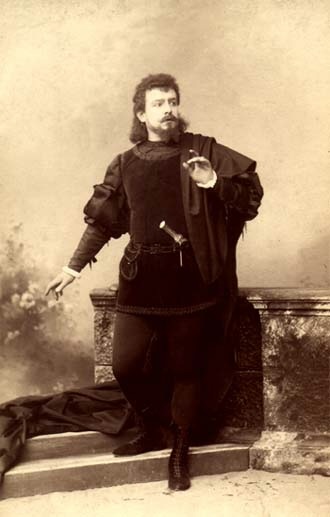
The picture at the head of this post is De Reszke as Romeo. There are many more pictures, plus information about his brother Edouard, here.

Review of Don Carlo from Midsummer Opera

My review of Midsummer Opera's concert performance of Verdi's Don Carlo in the 4-Act 1884 version, is here, on Music and Vision (subscription site).

Tuesday, 16 November 2010

Review of Gounod's Romeo et Juliette

On Saturday we attended Gounod's Romeo et Juliette at Covent Garden. My review is here, on Music and Vision (subscription site)

Sunday, 14 November 2010

Buxton Festival

This year's Buxton Festival looks as tempting as ever with Mary Plazas taking the title role in Donizetti's Maria di Rohan in a production by Stephen Medcalf and Jonathan Best as Handel's Saul in a staged performance directed by Olivia Fuchs and conducted by Harry Christophers. Staging Handel's oratorios is always tricky, but Saul is one of the more dramatic ones and it can be made to work. Annilise Miskimmon is staging Ambroise Thomas Mignon, definitely a rarity on these shores nowadays though it used to be extremely popular. The Wexford Festival staged the piece many years ago in a production by Richard Jones, but this does not seem to have started a revival.

Buxton have also announced their new artistic Director, Stephen Barlow, who takes over from Andrew Greenwood in 2011. We have seen Barlow conduct quite a number of times at Grange Park Opera, and his own opera based on Thomas Beckett and Henry II was premiered at Canterbury Cathedral. It will be interesting to see what mark he makes on Buxton

Saturday, 13 November 2010

Critical (re)evaluation

This month's Opera Magazine has a review of ETO's premiere performance of Alexander Goehr's new opera Promised End by Andrew Porter. Porter gives the piece a long and thoughtful review which is very positive, quite a lot more positive than some of the reviews in the daily newspapers. I also found the work a little disappointing but Porter's valuable review has made me want to re-assess the work and hear it again. This is particularly true as ETO's performance will undoubtedly develop as their tour progresses.

Also in this month's Opera Magazine is a review of the CD of Michael Berkeley's latest opera, For You. For this opera Berkeley worked with Ian McEwen rather than David Malouf who had done the librettos for his previous operas. I have to confess that I have not seen For Your but have admired Berkeley's previous work. George Hall, in his review, seems unconvinced, describing the 'grey and anonymous ariosos', referring to the work as 'tiresome' and saying that Berkeley's two previous operas were more engaging.

Friday, 12 November 2010

Recent CD reviews

My review of Ockeghem's Missa de plus en plus from the Orlando Consort on Brilliant Classics is here.

A superb recording of the mass and if you can live with the chansons, then I would go for it.

And my review of Donizetti's Lucia di Lammermoor from Bergamo on Naxos is here. Both reviews on MusicWeb International.

Too much of a danger that you will listen to it and wonder what all the fuss is about.

Thursday, 11 November 2010

Broad Ripple Gazette, vol 7, no 23

first published in the Broad Ripple Gazette

Midtown Holiday Home Tour Café and Market
The Rivera Club
5640 North Illinois Street
Indianapolis, IN
11:00 – 5:00, café -free, all-ages, nonsmoking
Home Tour tickets $15.

The Midtown Holiday Home Tour will feature three homes on Meridian Street, one on Illinois Street and the recently renovated Phi Delta Theta fraternity house at Butler University. They will be festively decorated for the holidays by local floral designers. Fancy!

The Riviera Club will also be part of the tour festivities. Rivi will host the tour café as well as a market featuring local businesses. Rivi would be a great place to meet and carpool to the tour homes or to just hang out.

There will also be music at the café:

Saturday
11:00 - Chad Mills
Noon - Alice Chalmers ATSACIYJB
1:00 – Freshly Brewed
2:00 – Patchwork
3:00 – Joe Peters
4:00 – Robert Bruce Scott

Sunday

1:00 – Il Troubadour


Tonic Ball 9, featuring songs of the Beatles
Friday, November 19, 2010
Fountain Square Theatre/ Radio Radio
Fountain Square
7:00, $20, non-smoking
Tonic Gallery
New Day Meadery
free

The Tonic Ball and Tonic Gallery is one of Indianapolis’ most popular nights of music and art – I certainly know that it’s mine! The Tonic Gallery features works by some of the city’s most renowned visual artists – Douglas David, Susan Brewer, Kyle Ragsdale and my dad (he made an awesome bench from rescued church pews). The art work is sold in a limited silent auction, starting at $100 with a buy-it-now price of $400.

The Tonic Ball features over 30 bands all playing at least one Beatles song. I’ve been working really hard to make sure that none of the songs are duplicated. The ticket allows you to visit both venues and see as much music as you can. Radio Radio is 21+, but Fountain Square Theatre is all-ages and the over 21 crowd can still buy a drink at the bar – how cool is that?

For a complete line up of bands and other information visit: www.tonicindy.com
Tickets will be available at both LUNA locations by November 10 or you can purchase online now.

I can’t wait!


Jann Klose with Macaela Kingslight
Friday, November 19, 2010
Indy Hostel
4903 Winthrop Ave
Indianapolis, IN
317-727-1696
8:00pm, $10, non-smoking, all-ages

Singer-songwriter Jann Klose is based in New York, but has lived all over the world. He came to the States as an exchange student in Cleveland, Ohio he lived in Germany, Kenya and South Africa. His music reflects his music reflects this lyrically, melodically, rhythmically and in his choice of eclectic instruments and musicians.

During the course of his career, Jann has worked live or in the studio with artists ranging from pioneers like Pete Seeger and Les Paul to classic rockers like Roger (The Byrds) McGuinn, and Annie (Renaissance) Haslam to major country stars like Rosanne Cash and Marty Stuart. WGN Radio's Steve & Johnnie, Rock Hall inductee Joey Reynolds and Jethro Tull's Ian Anderson have all personally lent a helping hand in his career.

Jann's music has been featured on MTV's Cribs, the soundtrack to the Paul Sorvino film Dead Broke. He's performed in touring companies of Broadway shows: The Who's Tommy, Jekyll & Hyde, and Jesus Christ Superstar. Jann's most recent recording, REVERIE, was finance and produced with fan support.

Micaela Kingslight is a powerful singer with an elegant guitar style. She recently was awarded the Emerging Artist Grant from the Gilmore Foundation.

The Indy Hostel is a wonderful and intimate venue to hear music and enjoy time with the musicians.

www.indyhostel.us


Reverend Peyton’s Big Damn Holiday Show
Alice Chalmers ATSACIYJB, Neon Love Life, Rev. Peyton’s Big Damn Band
Friday, November 26, 2010
Vogue Theatre
6259 N. College Ave.
Indianapolis, IN 46220
$12 – advance, $15 – day of show, non-smoking, 21+

When I was in Austin last month I was having dinner with a friend – and by dinner, I mean whiskey, when I got a text from “Washboard” Breezy Peyton asking if Alice Chalmers could open for their holiday show. I shakily told my friend that the band was asked to play at the Vogue. He said, “Great! What band?” Umm, “the band I’m in.” I will totally admit to squealing and jumping up and down!

So, Alice Chalmers and The Stick a Cork in Your Jug Band will be kicking off the day-after Thanksgiving show and we couldn’t be more excited about it.

The all-woman jug band will be followed by the all-woman rockers, Neon Love Life. NLL’s Lindsay Manfredi and I were both at the Toad The Wet Sprocket show at the Vogue this summer. We independently “ran into” (stalking seems like such a harsh word) the band’s Glen Phillips in the alley behind the Vogue. I told Glen that Lindsay was in a punk band and that I was in a jug band. Glen told us, “they're closer than you think.” Now you can be the judge.

The main event of the evening will be, Reverend Peyton’s Big Damn Band. This will be their homecoming show. They’ve been on the road for months and having a wonderful time in Europe and the East Coast. I don’t have the words to explain how damn fun the band is. And I’m sure they’ll have some great stories.

See you there - I’ll be the one playing typewriter and grinning wildly.

http://thevogue.com
www.bigdamnband.com
www.neonlovelife.com

Monday, 8 November 2010

Broad Ripple Gazette, vol 7, no 22

 first published in the Broad Ripple Gazette

Happy Anniversary gentle readers! The first Buzzing Around Town column was published on October 28, 2005. I can’t believe that five years have passed and that I haven’t missed a column – although there were times that both publisher, Alan Hague and I doubted that I’d manage to slide one in at the absolute last minute. Sorry Alan!

I’ve meet scores of amazing people in the last five years – and I think you’re all the bee’s knees! I appreciate everyone who has introduced themselves to me. I still blush and stammer, but I’m thrilled to meet you. I’ve written 125-ish columns in the last five years. All of that writing has been great practice for me. I’ve managed to find my writing voice and confidence. In early columns I spent a good deal of time apologizing for my age and lack of formal musical knowledge.

When the column first started I was writing on a wheezy desktop computer that took up most of my living room and was connected to the Internet via telephone line –when it worked. The first year the majority of my writing was done at a computer at Indy Hostel – thanks John. The next year I bought an iBook with a wireless connection. Too bad I didn’t have wireless at home. Many a column was sent late at night with my computer pressed up to the window at the News Café. I’m sure I surprised many last-call patrons leaving Moe and Johnny’s when they walked by and I was holding the computer at odd angles trying to catch the wireless connection.

I’ve graduated to a MacBook that hardly ever leaves my side – I don’t go as far as to sleep with it, that would be nuts! I keep it beside the bed. I also have a fancier camera, with a detachable lens, which allows me better access to photograph bands.

The five years of writing BAT has opened many doors for me. I now freelance for NUVO newsweekly and the national music magazine, Ghettoblaster. I vote each week on the Top Ten Live list that is published in Metromix. I still get a thrill when I see a stack of Broad Ripple Gazettes in the window of a business or catch a glimpse of someone reading one. I often hear that the Gazette is the best paper in town and I heartily agree.

At the Austin City Limits Festival in October
photo credit: Laura Steele

I look a little different now from the bee caricature above. In the last five years my hair has been longer and straighter and back. I now wear glasses – you can draw those in if you like.

I wish I had more time and could see every bit of music that is out there. For all of us at the Gazette, writing is a volunteer gig – one that I’m thrilled to have. I have the same jobs (yep, jobs, plural) that I had when the column started and I adore every one of them. I was promoted at Second Helpings three years ago; I’m now the director of operations for the food rescue, job-training and hunger relief agency. I love my once-a-month Sunday shift at Marigold, the wonderful clothing store next to Big Hat Books at the Broad Ripple Brew Pub. I’m still the waitress/cook at the iconic Red Key Tavern most Saturday nights and couldn’t be happier about it.

When people tell me there is nothing to do in Indianapolis I want to swat at them with a rolled up Gazette. My problem is choosing what to do. You can find art and music on almost every corner in Broad Ripple – isn’t it awesome! I’ll see you out and about. And thanks for reading. Seriously, thanks.


The New Christy Minstrels
Thursday, November 4
The Mansion at Oak Hill

5801 East 116th Street

Carmel, Indiana 46033
317-843-9850
7:30, dinner & concert, $45

Our own Greg O’Haver (Crossover, A Touch of Grass) is movin’ on up! He’s left the basement venue of the Corner Wine Bar and is now touring with the Grammy winning folk band, The New Christy Minstrels.
How Greg got there is a great story. He had auditioned for Randy Sparks (founder and leader of TNCM) in 1968 and came close to touring the Orient with Randy when Fats Johnson decided to join the tour and bumped Greg. Over 40 years later, a second audition in March of this year got Greg a spot in the band. Randy calls Greg,” …our newest, brightest star in the revived New Christy Minstrels.”

The New Christy Minstrels have an aggressive tour schedule. We re lucky enough that they are stopping in Carmel to play a show at The Mansion at Oak Hill in Carmel. It promises to be big folk fun. The ticket price includes dinner and the bragging rights that you know someone in the band.

www.thenewchristyminstrels.com
 www.oakhillmansion.com

Saturday, 6 November 2010

Recent CD Review


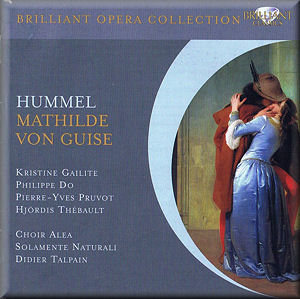
My review of Hummel's opera Mathilde de Guise, released on Brilliant Classics, is here, on MusicWeb International.

At Brilliant’s budget price, highly recommendable for anyone interested in what was happening to German opera in the period between Beethoven and Wagner.

Friday, 5 November 2010

New Mailing List

I am trying out new mailing list software, this comes with a web-form sign-up, so if you are not already on my mailing list then here you are:-


Saturday, 30 October 2010

Winner of the 2010 Ferrier Awards

On Thursday night we were privileged to attend a private recital by Njabulo Madlala, the winner of the 2010 Ferrier Awards. Incidentally the awards will be celebrating the 100th anniversary of Kathleen Ferrier's birth in 2012.

Madlala, with accompanist James Baillieu, started with a group of Duparc songs. I must admit that I prefer these songs in the female voice, but Madlala's lovely baritone and nuanced way with the music had me convinced. He followed with a Schumann group which included a thrilling account of Belsazzar and a wonderfully narrative Die Beiden Grenadier. A group of Spirituals closed the first half.

The second half opened with a Strauss group. If a male voice singing Duparc is tricky, then male voices singing Richard Strauss is well nigh impossible. I heard Dieskau do en entire Strauss recital, and that never convinced me. Madlala's sheer passion and commitment brought off the first three songs, Zueignung, Allerseelen, Heimliche Aufforderung in a stunning manner. Morgen was less successful, Strauss gives the male voice an impossible task having to come in an octave lower than the long instrumental solo in the songs opening. But I have to admit that my companion felt that song worked well and that I was being too picky.

These were followed by an English group. A pair of Vaughan Williams songs and a pair of Butterworth, given evocative performances. Madlala has a lovely open personality which infused all the songs that he sang. But this really came to the fore in the final group of songs, all traditional songs from his native South Africa. An entrancing end to a lovely recital. Madlala is definitely a name to look out for.

Friday, 29 October 2010

Alice Coote and the English Concert

Alice Coote's recital the the Wigmore Hall, on Wednesday 27th, with the English Concert directed by Harry Bicket, was a slightly uneasy mixture of vocal items. It was one of those programmes which seemed to have been constructed on the basis of 'things I'd like to sing' rather than a coherent narrative. So that Coote started with Monteverdi's Lamento di Arianna and then went on to sing a pair of Dowland songs before finishing with Handel's cantata La Lucrezia. In between these items the English Concert offered us Vivaldi's Sonata La Folia, Vivaldi's violin Concerts Il Grosso Mogul and a Vivaldi Cello concerto.

Now Coote is one of those singers who has managed to hang on to her period performance strand whilst still running an impressive career singing Strauss, Elgar and co. And when she performs it is never less than interesting, never. Her way with Monteverdi's Lament was mesmerising, detailed and large scale. She was accompanied by a substantial continuo group which included two fretted instruments, a harp, cello, double bass plus keyboard. The result was thrilling and vivid, but perhaps a little big boned.

Coote's way with the music was in fact so vivid, that you can't imagine her sustaining such a level of detail throughout an entire opera. And there is a case her for 'less is more'. This was definitely the case with the Dowland, where Coote seemed in danger of overshadowing her accompanist, William Carter. But it was in Handel's cantata that her approach brought immense dividends, actually using the music to drive the drama you almost felt that Coote was in danger of committing suicide herself. This was a coruscating performance. Can't someone persuade a record company to record this singer in Handel cantata's before her voice gets too big for the repertoire.

Before the concert started Coote was announced as having only recently recovered from 'flu but there seemed happily no sign of this in her singing.

The English Concert opened with the Vivaldi sonata in a thrilling performance led by Rachel Podger. And Podger shone even more in the cascades of notes which Vivaldi provides in his violin concerto, her performed with the surviving cadenzas so that we had an even closer idea of what it might be like to hear Vivaldi himself playing.
Jonathan Manson was the elegant soloist in the Vivaldi cello concerto.

After all the tumult of Handel's cantata had died down, the English Concert sent us home, toes tapping, with a delightful account of Pachelbel's Canon

Wednesday, 27 October 2010

Piazolla

Last night we attended a wonderful private recital by the Amor Quintet who play music by Astor Piazolla. They gave us a preview of their programme for their concert at St. James's Piccadilly, London on Thursday 28th October and they return to St. James's on 22nd December.

The quintet consists of Nikolai Ryskov - accordion, Anne-Marie Curran - violin, Gabriele Faja - piano, Milton Mermikides - guitar and Sam Ryan - double bass. The group plays Piazolla's original music rather than arrangements. They give wonderfully vivid and infectious performances, underlying which goes a great deal of artistry and virtuosity.

Their web-site has a sample of their playing and if you go to one of their concerts you'll be able to buy their first CD.

Saturday, 23 October 2010

When a Man Knows he needs Friends


As part of the run up to the performances next year of my opera When a Man Knows we have launched our friends scheme, When a Man knows he needs Friends, to encourage those interested to help support the performances of the opera.

There is more information here in an attractive pdf

Rare Rossini

As a complete contrast to the Lachenmann weekend at London's South Bank Centre, you can also visit the same venue this evening to hear a concert performance of Rossini's opera Aureliano in Palmira. Conducted by Maurizio Benini, a strong cast includes Catriona Smith, Kenneth Tarver, Silvia Trio Santafe and Andrew Foster Williams. The opera dates from 1813 and was premiered at La Scala, Milan. It comes between Tancredi, L'Italiana in Algeri and Il Turco in Italia. The role of Arsace was written for the castrato Velluti, the last of the great castrati. He also created the role of Armando in Meyerbeer's Il crociato in Egitto. In 1826 he took over the management of the Kings Theatre in London and appeared there in Aureliano. But after this the opera seems to have fallen into obscurity until the first modern revival in 1980.
The concert is at 7.00pm at the Royal Festival Hall.

Thursday, 21 October 2010

Helmut Lachenmann at the South Bank Centre

Having devoted weekends to modernist composers such as Stockhausen, Messiaen, Nono, Xenakis, Berio, and Varèse the South Bank Centre are now turning their attention to Helmut Lachenmann. Now I must confess that Lachenmann's name is relatively unknown to me but his music is described as musique concrète instrumentale which is a term I've come across. In his music he uses instrumental sounds to emulate electronic music and has invented a wealth of techniques for instruments to use; naturally his music places strong demands on the players.

The South Bank Centre are devoting 2 days to Lachenmann. On Saturday 23rd October there are two concerts of his chamber music, along with a discussion between Lachenmann (now 75) and Ivan Hewett. Then on Sunday 24th October, the London Sinfonietta, under Brad Lubman give a concert of Lachenmann's orchestral music with pianist Rolf Hind.

The weekend presents a rare opportunity to get to know some of Lachenmann's music and enter the 'uncharted sonic realms free of habits of typical concert music' which it promises.

Saturday 23 October 2010: Queen Elizabeth Hall
Lachenmann Chamber Music Day
Tickets: £9–15

3PM – Arditti String Quartet
Lachenmann String Quartet No. 1, Gran Torso
Lachenmann String Quartet No. 3, Grido

4.15PM – Helmut Lachenmann discusses his music with journalist Ivan Hewett

5.30PM – Sarah Leonard (soprano), Rolf Hind (piano), Oliver Coates (cello)
Lachenmann Got Lost for soprano & piano
Lachenmann Pression for solo cello
Lachenmann Dal Niente for solo clarinet

Sunday 24 October 2010: Royal Festival Hall,
7.30PM - London Sinfonietta, Brad Lubman (conductor), Rolf Hind (piano)
Lachenmann Ausklang for piano & orchestra
Lachenmann Schreiben


If you are curious about Lachenmann's music then you can find some examples on his spotify playlist http://open.spotify.com/user/southbankcentre/playlist/4al6RuLlCOHngSAkPut8vo

Wednesday, 20 October 2010

Recent CD Reviews

My review of the re-issue of the 1989 Kings College, Cambridge recording of Spem in alium is here.

An admirable re-issue and if you don’t already have a copy, go out and buy it at once.

And my review of a disc of sonatas by Giovanni Vitali is here. Both reviews on MusicWeb International.

Full of liveliness and charm.

Monday, 18 October 2010

CD Review

William Grant Still:Danzas de Panama for String Quartet
Antonin Dvorak: String Quartet in F Major, Op. 96 (American)
Samuel Barber: String Quartet in B Minor, Opus 11
George Gerswhin: Lullaby for String Quartet
Serafin String Quartet
Centaur CRC 3050

The Serafin Quartet are a young American group who made their debut in 2004. The group's name comes from the 18th century violin maker, Sanctus Serfin, who made violinist Kate Ransom's violin. The group's line up is democratic, with both Kate Ransom and Timothy Schwarz taking turns as first violin. The remaining line up consists of Ana Tsinadze, viola, and Lawrence Stomberg, cello.

They have just released their first commercial CD on the Centaur label. This consists of an interesting programme which explores might make an American quartet, with works by William Grant Still, Dvorak, Samuel Barber and George Gershwin. This programme formed the core of the quartet's visit to London in September when they gave a recital at St. John's Smith Square.

The group open with William Grant Still's Danzas de Panama, a 4 movement suite for string quartet based on traditional melodies collected by Elisabeth Waldo. The cultural influences range from music of African Slaves to Spanish-Indian. Though Grant Still calls for some imaginative drum type beats, where the instrumentalist beats on the body of the instrument, the work is by and large quite traditional. Whereas in El Salon Mexico Aaron Copland (2 years younger than Grant Still) takes you physically into the Mexican dance hall, Grant Still is very much based in the salon or drawing room. His well-made arrangements are attractive and light, but they feel rather conventional and sanitised compared to Copland. But Grant Still's music is a relative rareity in the catalogue and the Serafin Quartet give his suite a lively and infectious performance.

They follow this with Dvorak's American Quartet, written in 1893 in response to meeting up with Czech immigrants in Iowa. Though the work does hint at Dvorak's inspirations in the New World, much of the piece is still based in Dvorak's old Czech world. The Serafin Quartet play with a pleasing melodiousness and a lightness of touch, but there were times when I would have liked more of an element of darkness to creep in. Theirs is a fine, slim tone, with a good emphasis on musical line. The Lento movement comes over particularly well, with some lovely singing lines. In the final Vivace, the group provide some nice perky rhythms, but you would not mistake them for a Czech group.

It is difficult to listen to Barber's Quartet (his only essay in the medium) without your listening being distorted by the subsequent fame the second movement found, independent of the Quartet, as the Adagio for Strings. In fact all three movements seems to struggle with the quartet medium and I did wonder what the quartet would sound like played by string orchestra. The entire work is a consciously retro piece, seeming to exist in an entirely different 1936 to reality. The opening movement is a big, old fashioned Romantic statement. Here the group's technical control remains admirable, but their sound just needs to be fatter. Barber's big, bold, passionate music calls for more experience of life than these youngsters seem to be able to give just yet. But the adagio is giving a poignant and sensitive reading, Barber's long, elegant lines shining beautifully. The final Molto Allegro, is a short almost perfunctory movement. It is fascinating to hear the Adagio in its original context; but as a complete work I wasn't quite so sure.

Finally, we get a delightful bon bouche, Gershwin's Lullaby for String Quartet, dating from 1919 and giving a fresh and charming reading by the Serafin Quartet.

This is a fascinating disc, showing 3 American composers all trying to come to terms, in their different ways, with the very European medium of the quartet. And a European showing how the New World could cross fertilise with the old. This is a highly impressive debut from the Serafin Quartet.